

Members of underrepresented groups often lack access to role models within their minority. The HPC community is still predominantly male, making it difficult for young women to find female “superheroes” to identify with. Such role models are crucial for career planning and guidance. This session aims to provide especially women with the opportunity to meet influential, well-recognized female HPC “superheroes” from academia, research labs, HPC centers and industry. Join us to be inspired and find relatable role models as we work together to build a more inclusive and connected HPC community.
We are pleased to announce that this is the sixth iteration of the Super(computing) Heroes, held in conjunction with the WHPC worshop at SC26. Come along and support our women in HPC super(computing) heroes!
Target Audience:
Students, early-career researchers, and professionals, as well as educators, mentors, and community builders interested in diversity and inclusion. The BoF also targets decision-makers from academia, research labs, HPC centers, and industry seeking visible role models and inclusive practices.
 Dr. Ayesha Afzal is a researcher at NHR@FAU, Germany. She holds a PhD in Computer Science, an MSc in Computational Engineering, and a BSc in Electrical Engineering. Within IEEE CS, she serves as Vice Chair of the Germany Section Chapter and Region 8 A2, and TCHPC Secretary. She founded the NHR Women in HPC chapter and is FAU’s elected women’s representative. She contributes to HPC initiatives in performance engineering and energy efficiency, including KONWHIR (LRZ), DFG MOD4COMP (TU Dresden and Jülich), and NHR EEC (German NHR centers). Her work has received distinctions: ISC PhD Forum Award (1st, 2021), IEEE TPDS Best Paper Runner-up (2023), SC PMBS Best Short Paper (2023), WeAreTheCity Global Award (2023), SC Best Research Poster Finalist (2024), ISC Best Research Poster (1st, 2025), PhD with highest distinction (summa cum laude, 2026), and SCW75 HPC List (2026). At SC26, she serves as Posters Chair and organizes two workshops.
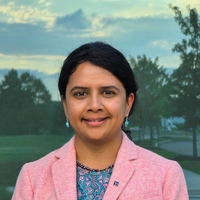 Sunita Chandrasekaran directs the First State AI Institute, at the University of Delaware, where she is also an Associate Professor in the Department of Computer & Information Sciences. A computer scientist by training, her team focuses on compiler implementations and programming models for heterogeneous systems; the software foundations that let scientific applications harness modern accelerated hardware. Beyond core systems research, her team applies computing to advance discovery across a broad range of disciplines, from plasma, bio, nuclear, and solar physics to the arts and sports. She leads the NSF SCIPE–funded DARSE project, which democratizes access to research software engineering (RSE) and builds a computational research workforce across the Mid-Atlantic. She served as PI of the DOE Exascale Computing Project’s SOLLVE project, advancing directive-based programming models for exascale platforms such as Frontier, Perlmutter, and Aurora. She serves as Vice Chair of the State of Delaware AI Commission where the commission develops statewide processes, principles, and guidelines for state agencies to follow and use AI safely and responsibly. She earned her BE from Anna University, India, and her PhD from Nanyang Technological University, Singapore.
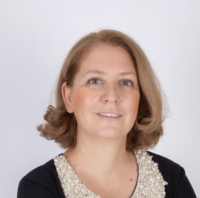 Buket Benek Gursoy has worked as a Computational Scientist at the Irish Centre for High-End Computing (ICHEC), University of Galway, since 2012. At ICHEC, she has contributed to user support activities as part of the National Service and has worked on various PRACE and EuroHPC projects in Performance Engineering. She has also contributed to graduate-level teaching through ICHEC’s Training and Education programme.
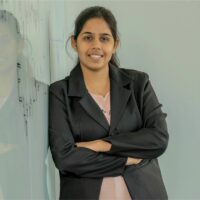 Aarushi Jain works at AMD focusing on ML Inference acceleration for MIGraphX – AMD’s graph inference engine which accelerates machine learning model inference.
 Cristina Manzano studied telecommunications engineering at the Polytechnic University of Valencia (UPV) in Spain and obtained her master’s degree from the Norwegian University of Science and Technology (NTNU) in Trondheim. Since 2009, she has been employed at Forschungszentrum Jülich in Germany, working in the “Technical Systems and Services” division of the Jülich Supercomputing Centre. As a data and file system expert, she has contributed to various European projects, such as EUDAT and the DEEP projects. Cristina was part of the core team that initially developed the LOFAR Long Term Archive in Jülich. She continues to work on the day-to-day operation of this archive, focusing on optimizations, I/O research, and data challenges, and currently leads the Operation & Development Team “Technical Services”.
 Paola A. Buitrago leads the Artificial Intelligence and Big Data (AIBD) group at the Pittsburgh Supercomputing Center. The AIBD group is focused on advancing and supporting the convergence of High Performance Computing (HPC), Artificial Intelligence (AI) and Big Data for open science. Buitrago oversees a set of projects for AI research on emerging hardware and software technologies, enabling development of advanced algorithms and modeling approaches. Buitrago is the PI and Project Director of the NSF-funded
 Karina Pešatová coordinates educational and training activities to ensure impactful outcomes. She delivers tailored experiences to diverse audiences. Karina is passionate about outreach and dissemination, leveraging innovative strategies to drive engagement. As a fervent advocate for science communication, she makes complex ideas accessible to broader audiences. With expertise in public and media relations, she crafts compelling narratives to foster positive stakeholder relationships. Her expertise includes corporate communications and social responsibility, aligning values with impactful initiatives.
 Helena Vela Beltran is a computational scientist at Do IT Now (Spain), where she leads European projects and focuses on high performance computing (HPC), AI/ML environments, and complex software stacks. She specializes in optimizing workflows, tuning HPC applications, and contributing to open-source projects, while also supporting researchers through training, documentation, and user engagement.