
When
Wed 24, Jun, 2026
10:45 am - 11:45 am
Where
CCH – Congress Center Hamburg
Congressplatz 1
Hamburg, , 20355
Germany

super(computing)heroes

Wednesday, June 24, 2026 10:45 AM to 11:45 AM · 1 hr. (Europe/Berlin)
Hall F – 2nd Floor
Birds of a Feather

Members of underrepresented groups often lack access to role models within their minority. The HPC community is still predominantly male, making it difficult for young women to find female “superheroes” to identify with. Such role models are crucial for career planning and guidance. This session aims to provide especially women with the opportunity to meet influential, well-recognized female HPC “superheroes” from academia, research labs, HPC centers and industry. Join us to be inspired and find relatable role models as we work together to build a more inclusive and connected HPC community.


We are pleased to announce that this is the fifth iteration of the Super(computing) Heroes, with the latest at SC25. Come along and support our women in HPC super(computing) heroes!


Target Audience: 

Students, early-career researchers, and professionals, as well as educators, mentors, and community builders interested in diversity and inclusion. The BoF also targets decision-makers from academia, research labs, HPC centers, and industry seeking visible role models and inclusive practices.

Meet The Panelists:

Emily Moffat Sadehi

Developer Relations Program Manager

The Ohio State University

Emily Moffat Sadeghi is the Developer Relations Program Manager for Open OnDemand (OOD) at the Ohio Supercomputer Center. She has over 10 years of experience in higher education connecting technical teams with the people they support. Emily shapes OOD development priorities, facilitates HPC community collaborations, coordinates projects, and advocates for community needs. She is passionate about making OOD easier to use and understand through clear documentation and transparent decision-making.

Maria-Ribera Sancho

Head of Education and Training

Barcelona Supercomputing Center

Professor Maria-Ribera Sancho is Head of Education and Training at the Barcelona Supercomputing Center (BSC) and Professor at Universitat Politècnica de Catalunya (UPC). With nearly four decades of experience in computer engineering education, research, and institutional leadership, Professor Sancho has contributed significantly to informatics and HPC education at both Spanish and European levels. Her research activity has focused on software engineering, conceptual modelling, ontologies, and their application to different domains, particularly learning analytics. She has published in international journals and conferences and has led national, European, and industrydriven research projects. She leads BSC’s education and training strategy in High-Performance Computing (HPC) and emerging digital technologies, coordinating European initiatives focused on skills development, curriculum design, and advanced HPC training. She currently coordinates the European project EVITA, holds leading roles in major European HPC education initiatives including CASTIEL3 and EUMaster4HPC2, and plays a key role in the training activities associated with the BSC AI Factory. She currently serves as President of EQANIE (European Quality Assurance Network for Informatics Education). Her work focuses on strengthening Europe’s HPC and AI talent ecosystem and advancing high-quality education and training in digital technologies.

Marlies Hankel

Senior Development and Consultation Manager

Research Computing Centre The University of Queensland

With a background spanning research and high-performance computing, Marlies Hankel holds a Master’s degree in Mathematics and a PhD in Chemistry. After moving to the University of Queensland in 2004, she managed her first HPC system and went on to build three HPC infrastructures from scratch between 2005 and 2014, while continuing her academic research and teaching as a Senior Lecturer in Mathematics. Her research focused on gas-phase dynamics and later on nanomaterials. Since 2011, her role has combined research and HPC/eResearch activities, transitioning fully into HPC/eResearch in 2021. In her current position, she focuses on the user-facing side of HPC, including user support, software, training, and documentation, while also overseeing operational procedures and access policies for the research computing centre.

Mennatallah Samier Saleh

HPC Application Specialist

NYU Abu Dhabi, Georgia Tech

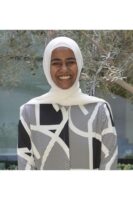
Mennatallah Samier Saleh is an HPC Application Specialist at NYU Abu Dhabi and an M.S. candidate at Georgia Tech. She architects the software ecosystem for the 47,000-core “Jubail” cluster and provides technical expertise for interdisciplinary research, notably optimizing neuroimaging and MRI pipelines. Her thesis research focuses on dynamic graph optimization and the architectural tuning of large-scale scientific applications. A graduate of Alexandria University with honours, she previously served as an HPC software engineer at BrightSkies, leading optimisation projects for Intel and Saudi Aramco. She is the Founder of the Women in HPC (WHPC) MENA affiliate, a regional initiative she spearheaded to increase visibility, mentorship, and representation for women in high-performance computing across the Middle East and North Africa.

Organisers

Central European Chapter of WHPC

Karina Pešatová, IT4Innovations, VSB – Technical University of Ostrava

Jülich Women in HPC Chapter

Cristina Manzano, Jülich Supercomputing Centre

Mediterranean and Related

Helena Vela Beltran, Do IT Now

Marta Garcia-Gasulla, Barcelona Supercomputing Center

Elisabeth Ortega-Carrasco, Qilimanjaro Quantum Tech

Other

Carmen Heras, ACARUS