

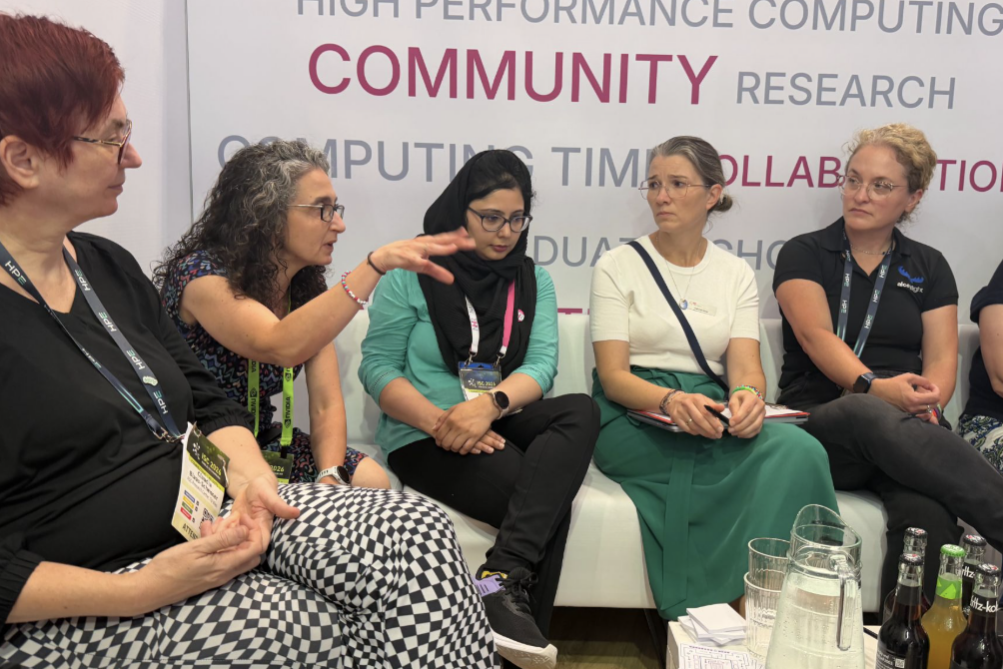
At ISC26 in Hamburg, a WHPC Sofa Talk brought together people from across the HPC community around a familiar question:
How do we attract more women to careers in HPC?
It didn’t take long for the conversation to move beyond it. Because attracting more women assumes that people already know HPC exists. That they understand the careers available within it. That they encounter those opportunities early enough to imagine themselves pursuing them. And that, once they arrive, they find an environment where they can participate, develop, and progress.
Perhaps, then, attracting more women isn’t the problem we need to solve. Perhaps we need to think more broadly about how people find HPC in the first place, what happens when they get here, and what might make them stay.
You can’t choose a career you don’t know exists
HPC isn’t always an obvious career destination.
Relatively few degrees have “High Performance Computing” written across the top, and many people in our community arrived through another discipline. Computer science, physics, engineering, mathematics and research software provide some of the more recognisable routes, but they are far from the only ones.
For people already inside HPC, that diversity of routes can be one of the things that makes the community interesting. For someone outside it, however, it can make the route in difficult to see.
That makes early exposure important. Schools, universities, internships, hackathons, student cluster competitions, mentoring and outreach programmes all create opportunities for people to encounter research computing before they have made too many decisions about what a technical career is supposed to look like.
This isn’t only about encouraging girls to study STEM. It is about making the careers themselves visible. If someone has never met a research software engineer, HPC systems administrator, applications specialist or research computing professional, how are they supposed to know that becoming one is an option?
An invitation needs somewhere to lead
Awareness is only the beginning. Once someone becomes interested in HPC, they need a path they can actually follow.
Mentoring can help. So can internships, training programmes, student competitions, scholarships and opportunities to meet people already working in the field. Experienced community members can make an enormous difference simply by making those routes easier to understand and navigate.
That support matters particularly in a field where there isn’t always a standard career ladder.
But opportunity also means giving people room to grow once they arrive. One interesting point raised during the Sofa Talk was the way we organise activities intended to support underrepresented groups at conferences. Dedicated spaces can be incredibly valuable. They build community, allow experiences to be shared, and give people opportunities to build networks that might otherwise be hard to find.
But unintended trade-offs can also arise. If an inclusion event runs at the same time as technical training, the people it is meant to support may have to choose between building community and building skills. If activities take place away from the main conference, participants can find themselves physically removed from other opportunities.
Neither is the intended outcome. It raises a useful question for all of us organising community activities: how do we create spaces for belonging without separating people from the places where careers are being built?
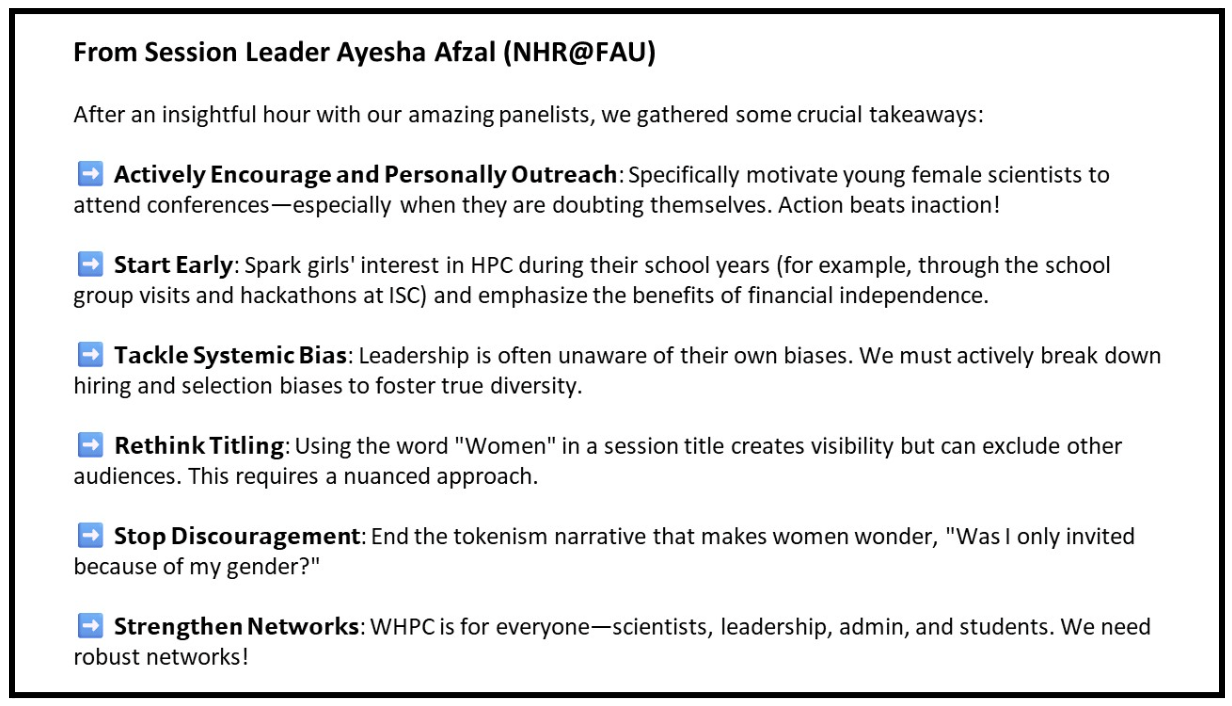 Getting people in isn’t the same as keeping them
Recruitment numbers are easy to see. Retention is harder.
A successful programme can introduce someone to HPC. An internship can give them their first experience. A mentor can encourage them to apply for their first role.
But what happens five, ten or twenty years later matters too. Professional development, promotion, pay, caring responsibilities, workplace culture and access to networks all influence whether someone can build a sustainable career.
That means the conversation about women in HPC cannot end when someone accepts their first job. If people enter the field but hit barriers to progressing, focusing only on recruitment simply sends more people into the same system. We have to look at the whole journey.
This is also a workforce question
This conversation matters for another reason: HPC is changing.
AI is creating new demands for infrastructure, skills and expertise. Quantum computing is introducing another set of technologies that will need to interact with existing research computing environments. Systems are becoming increasingly complex, while research still depends on people who can connect computing, software, and domain knowledge.
The community needs people who can do that work. Lots of them. Seen from that perspective, broadening participation isn’t separate from the future of HPC. It is part of building the workforce that the future requires. We cannot afford to make technical careers unnecessarily difficult to discover. We cannot afford to overlook capable people because they don’t resemble those who traditionally entered the field. And we cannot afford to lose talented people after investing in bringing them in.
So, how do we attract more women into supercomputing?
Perhaps we don’t start with women. Perhaps we start with the field of HPC:
- How do people discover us?
- Can they see a route in?
- Do they have opportunities to learn and progress?
- Can they participate fully once they arrive?
- And have we created a community in which they can imagine building a career?
Those questions extend well beyond gender. They are questions about how we build a healthy, sustainable and sufficiently skilled HPC community. The Sofa Talk began with a question about attracting more women. It ended somewhere much bigger:
How do we make sure everyone who could contribute to HPC has the opportunity to find it, enter it, and thrive within it? That might be the question worth carrying forward.
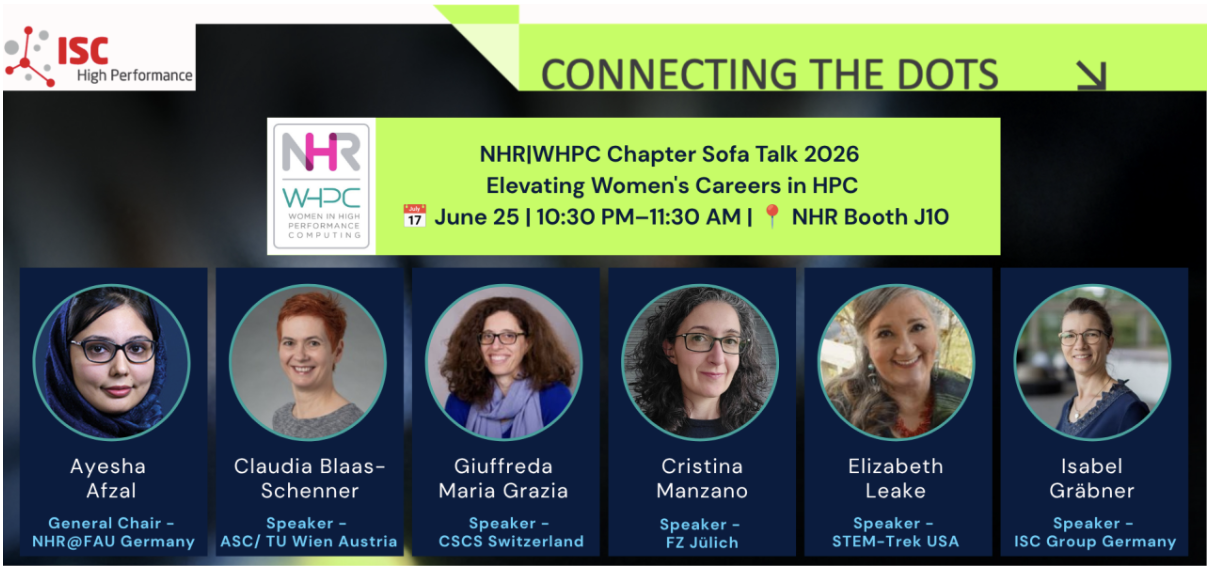 The ISC26 WHPC Sofa Talk, hosted by Ayesha Afzal of NHR@FAU, brought together participants from across the international HPC community to share experiences and perspectives on pathways into research computing, participation, and career development.