
The WHPC@SC26 workshop will be held in Chicago, IL, USA with the goal of fostering a diverse and inclusive HPC community. The WHPC workshop series has become the leading SC event focused on DEI topics. We aim to cultivate skills for valuing a diverse workforce and creating a welcoming environment for all. Following the workshop held at SC24, we have an increased emphasis on diversity and inclusion of all people from under represented groups.
WHPC@SC26 will focus on the following topics:
- Building community through real-time networking
- Improving diversity and inclusion for all in the HPC workforce
- Highlighting and supporting early career researchers from under represented groups
- Building a deeper understanding of what diversity, equity, and inclusion means for different groups
- Learning from, and valuing, different experiences and career paths
 Ana Marija Sokovic, PhD, is Lead Computational Scientist at the University of Illinois Chicago’s Advanced Cyberinfrastructure for Education and Research (ACER), where she supports researchers using AI, GPU computing, and quantum-HPC workflows. She holds an M.Sc. in Aeronautical Engineering from the University of Belgrade and an MBA from UIC, and has spent 14 years in HPC and research computing, beginning in genomics research at the University of Chicago before moving into bioinformatics, GPU-accelerated AI, and quantum-classical convergence.
 Wendy Wilhelm is the Engineering Director of the HPE HPC & AI Deployment Team for the Americas, overseeing the delivery of high-performance computing and AI systems. Her organization demonstrates teamwork in action every day, deploying small to large systems across the Americas region (HW, SW, Networking, Integration & Test). She has been involved in HPC systems and Server technologies since 1991 when she started as an HPC System Engineer. She spent much of her career in validation, integration, and debug work. She is married, has 2 adult children and volunteers with a local high school robotics team (FRC) as shop and leadership mentor. In her spare time, she loves to read a good book or to play card/board games with family and friends.
 Rebecca Hartman-Baker leads the User Engagement Group at the National Energy Research Scientific Computing Center at Lawrence Berkeley National Laboratory. She is a computational scientist with expertise in the development of scalable parallel algorithms. Her career has taken her to Oak Ridge National Laboratory, where she worked on the R&D100-award winning team developing MADNESS and as a scientific computing liaison in the Oak Ridge leadership computing facility; the Pawsey Supercomputing Centre in Australia, where she coached two teams to the Student Cluster Competition at SC and led the decision-making process for determining the architecture of Australia’s first petascale supercomputer; and NERSC, where she’s responsible for NERSC’s engagement with the user community to increase user productivity via strategic communication, advocacy, support, and training. During her tenure, the User Engagement Group has transformed the user training experience, developed the user community of practice, and introduced the first Code of Conduct at an HPC center. Rebecca earned a PhD in Computer Science, with a certificate in Computational Science and Engineering, from the University of Illinois at Urbana-Champaign.
 Fernanda Foertter is Executive Director of High Performance Computing and Data Center at the University of Alabama, where she is leading the development of a new research computing data center from the ground up.
 Ashwini Naik is a Computational Scientist and Visualization Laboratory Operations Lead at the Research Computing Center (RCC) at the University of Chicago, where she integrates scientific visualization, artificial intelligence, and high performance computing into collaborative research workflows spanning the physical sciences, biological sciences, social sciences, and humanities.
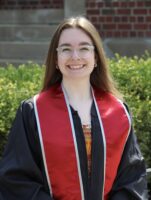 Olivia Maynard is a second year PhD student in Computer Science and Engineering at The Ohio State University, supervised by Dr. Suren Byna. Her work involves profiling I/O and data movement for scientific computing, particularly within scientific deep learning; she additionally has interests in architecture and security within scientific computing. Outside of her research, she is a passionate educator in engineering education and computer science, currently serving as the lead Graduate Teaching Associate for Ohio State’s first-year Engineering Foundations sequence in the Honors track. She graduated with her B.S. in Computer Science and Engineering from Ohio State in 2025.
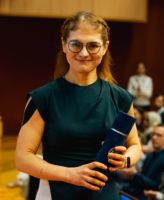 Dr. Erda Qorri is a postdoctoral researcher working at the intersection of academic research and the biotechnology industry. She obtained her doctoral degree from the University of Szeged in Hungary, where her research focused on improving the classification and interpretation of missense variants. As part of her doctoral work, she developed novel machine-learning features derived from protein structures generated using AlphaFold2, with the aim of supporting more accurate assessment of the functional consequences of genetic variation.
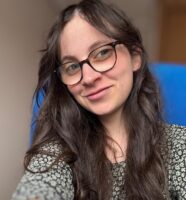 Eva Fernandez Amez is the Community Manager for Digital Research Infrastructure at Durham University. Her work focuses on developing training opportunities, fostering communities, and supporting the skills development of research technical professionals across the research computing landscape, with a particular focus on advanced and accelerated computing. She works closely with researchers, technical specialists, and community stakeholders to identify skills needs and create resources that support collaboration, knowledge exchange, and professional development. Alongside her community-building and training activities, she contributes to outreach and communications through website development, graphic design, video production, and science communication. She holds a degree in Physics and combines her scientific background with expertise in digital education and communication to make complex technical topics more accessible to diverse audiences.
 Yuqian Huo is a PhD student in Computer Science at Rice University, advised by Dr. Tirthak Patel in the Positive Technology Lab. Her research focuses on making quantum computers more reliable and efficient through better system design, compilers, and performance optimization. She works with both superconducting and neutral atom quantum computers. She is also interested in quantum machine learning, as well as security and privacy in quantum computing.
 Daria Godorozha is an MSc by Research student at the London School of Economics, where she founded the LSE Beavers HPC team. LSE has no STEM departments apart from statistics and mathematics. The team includes two women and members from a range of ethnic backgrounds, and finished 1st in one of two challenges and 3rd overall at the CIUK Cluster Challenge. It was also one of two student teams accepted onto an AMD/DIRAC UKRI funded residential research development programme, and received GPU and RSE support. She has spoken at Imperial College London HPC SIG on the topic of creating a successful HPC educational initiative. Previously, she completed an MSc in AI and Data Science with Distinction.
 Elizabeth Koleva is an HPC software engineer at the Discoverer petascale supercomputer in Sofia, Bulgaria, and works on agentic AI workflow management and deployment at BRAIN++, the Bulgarian AI Factory under EuroHPC, where she is sole developer of the organisation’s internal platform.
 Emma Urquhart and is a 3rd year PhD student in Computer Science at the University of Cambridge. Her research focuses on accelerating unstructured scientific methods on wafer-scale hardware. Her research interests include computer architecture, low-level software performance optimizations and scientific computing. Emma completed her undergraduate studies at the University of Galway, followed by the MPhil in Advanced Computer Science at the University of Cambridge, ranking first in her cohort.
 Serena Ma is a PhD researcher at the University of Leeds working at the intersection of high-performance computing, compiler optimization, and quantum computing systems. Her research journey has spanned CPU-side compiler optimization, large-scale GPU and AI infrastructure, and emerging quantum computing. Her broader research goal is to develop software and compiler techniques that maximize the useful performance of emerging computing hardware. Her interests include HPC, compiler optimization, heterogeneous systems, reinforcement learning for systems, and quantum software systems.
 Suné Toerien is a South African engineering student and high-performance computing (HPC) enthusiast based in Johannesburg. She holds a Bachelor of Engineering Science in Biomedical Engineering (BEngSc) from the University of the Witwatersrand and is currently a fourth-year Information Engineering student. Her interdisciplinary interests include computational methods, HPC performance, and applications in biomedical contexts. Suné’s earlier work includes a paper on skeletal muscle oxygen tension in COVID-19, exploring its potential as a disease severity marker. She also contributed to a collaborative HPC study on the productivity-to-energy trade-off via DVFS, core scaling, and C-state control. The work placed second in the ACM Student Research Competition at PASC26 in Switzerland and won Best Student Short Paper at PEARC26 in the USA.
 Preetika Kaur is a final-year Ph.D. candidate in Civil Engineering (Hydrologic Sciences) at the University of Wyoming, where she works on snow remote sensing. Her dissertation asks where satellite radar can be trusted to measure mountain snowpack. She built the first feasibility map of L-band InSAR snow water equivalent retrieval for the western United States, published in Geophysical Research Letters, and runs the Fortran-based SnowModel system on Wyoming’s Medicine Bow HPC cluster to simulate snowpack liquid water content across large mountain domains. She is now quantifying snow density variability at Arctic tundra and boreal forest sites in Alaska. She came to computational hydrology sideways. After a B.S. in agricultural engineering at Punjab Agricultural University in India, she completed an M.S. at Auburn University using X-ray computed tomography to quantify how tillage and cover crops reshape soil pore networks, producing three first-author publications and Auburn’s outstanding master’s student and thesis awards. Her HPC and cloud computing skills were assembled through hackweeks and summer schools rather than coursework, an experience that shapes how she teaches. She helped organize a University of Washington eScience Institute hackweek and taught a hands-on Google Earth Engine workshop at Wyoming. She is Vice President of the Society of Women Engineers at Wyoming and secretary of both its ASPRS student chapter and Wyomingites in Math, Science and Engineering. She won second prize in Wyoming’s Three-Minute Thesis competition and a Boyd Scott graduate paper award from ASABE, and completes her Ph.D. in May 2027.
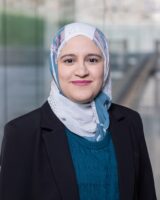 Nada Abdalgawad is a PhD candidate in the Computer Science and Engineering department at University of Michigan. Her current area of research is computer architecture with focus on memory architectures. She graduated with a Bachelor of Science in Computer Engineering from the American University of Sharjah, Sharjah, United Arab Emirates in 2020.
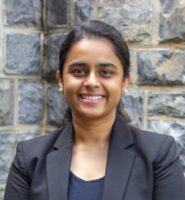 Sonal Jha is a Ph.D. student in Computer Engineering at Virginia Tech, where her research focuses on early and explainable health risk assessment through Graph AI and high performance computing (HPC). To improve the accuracy of risk assessment, Sonal developed graph-based methods that model clinically useful information from irregular and sparse clinical data. Her work has progressed from a graph-based approach using a single clinical variable to Graph AI methods for multivariable and multimodal clinical data. To improve the scalability, she studied bottlenecks in Graph AI training and developed distributed approaches for efficient multi-GPU training. On the professional front, Sonal serves as a Graduate Research Assistant (GRA) with Virginia Tech’s Advanced Research Computing (ARC@VT), where she provides HPC and AI consulting to faculty, postdocs, and students across 26 departments. Her work spans migrating, profiling, optimizing, and scaling scientific workloads; debugging parallel and distributed jobs; managing large-scale data; installing scientific software; and helping researchers integrate AI workflows on ARC’s HPC systems. She has interned at Hewlett Packard Enterprise (HPE) as an HPC and AI Visiting Scholar and at Los Alamos National Laboratory as a Data Science at Scale Intern.