

My First ISC Experience as a Women in HPC Travel Fellow
by Dr. Rabeea Jaffari
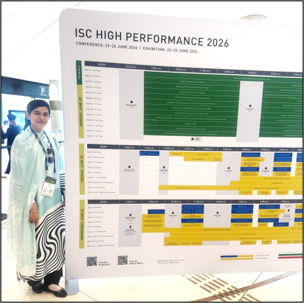
Attending ISC26 in Hamburg as a Women in HPC (WHPC) Travel Fellow was one of the highlights of my academic journey. As an Interdisciplinary AI researcher and Assistant Professor from Pakistan, this was my first opportunity to attend one of the world’s leading conferences on high-performance computing, and it exceeded every expectation.
I was honored to receive the WHPC Travel Grant Fellowship, which supported my participation by covering my conference registration, accommodation, and travel expenses. Opportunities like these make it possible for researchers from around the world to participate in the global HPC community regardless of institutional funding, and I am sincerely grateful to WHPC for investing in early and mid-career researchers.
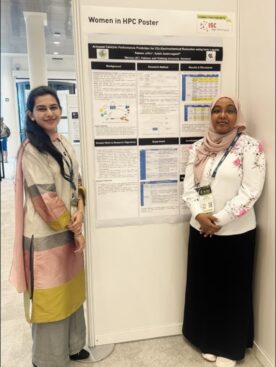
One of the highlights of the conference was presenting our research poster, “AI-based Catalytic Performance Prediction for CO₂ Electrochemical Reduction using Ionic Liquids,” during the WHPC Poster Session. This collaborative work with a friend, Dr. Sulafa Abdalmageed, from AAU Energy, Aalborg University, Denmark, explores how AI can accelerate catalyst discovery for sustainable CO₂ electrochemical reduction. By combining machine learning and deep learning with computational chemistry, we aim to lay the foundation for AI-assisted catalyst discovery that can significantly reduce experimental time and cost.
My Journey into HPC
One question I have received since returning home is what helped me become a WHPC Travel Fellow.
Although my current research lies at the intersection of AI and sustainability, my HPC journey began during my PhD at Universiti Teknologi Petronas (Malaysia), where I managed the High-Performance Cloud Computing Center (HPC3) while conducting research in deep learning and computer vision. More recently, I participated in the ICTP Training on HPC for Sustainable Development, where I explored how high-performance computing enables large-scale scientific research addressing global challenges.
In my fellowship application, I also emphasized how I planned to bring the experience back to my community through teaching, mentoring, and strengthening HPC awareness among students and researchers in Pakistan. Looking back, I believe demonstrating both prior HPC engagement and a clear commitment to community impact were important aspects of my application.
More Than Just a Research Conference
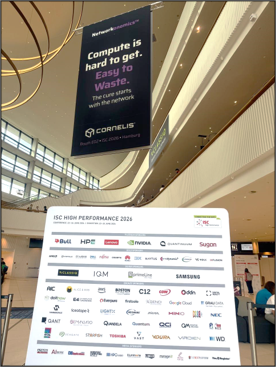
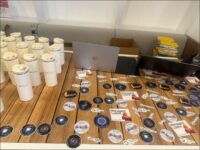
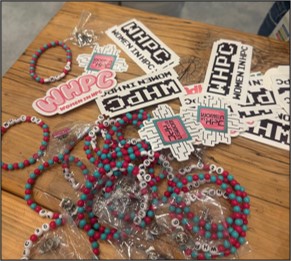
One thing that surprised me about ISC was how much there was to experience beyond the research presentations. The conference featured research papers, poster sessions, tutorials, technical talks, Birds of a Feather discussions, and a vibrant exhibition hall where leading technology companies showcased the latest developments in HPC and AI infrastructure. I enjoyed exploring the exhibition floor, speaking with industry experts, learning about emerging technologies, and, of course, collecting some memorable conference swag along the way.
One of the fun surprises during the conference was the free ice cream offered to attendees by xFusion. It was a thoughtful gesture that provided a refreshing break between sessions and added a small but memorable moment to the busy conference days.
The ISC mobile app deserves a special mention. It made navigating the conference incredibly easy by providing personalized schedules, venue maps, and real-time updates throughout the week.
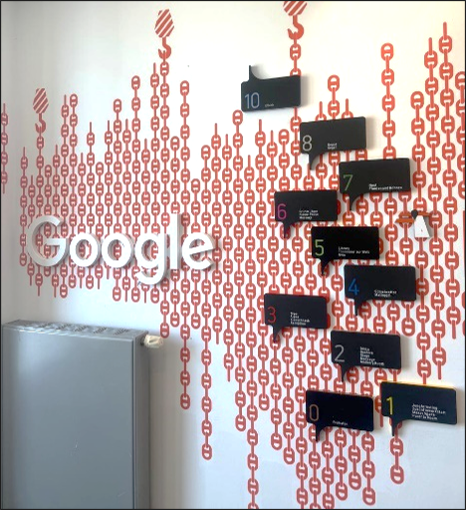
Beyond the conference itself, I also attended a technical event at Google Hamburg, which provided another opportunity to connect with professionals and learn from the wider technology community during ISC week.
Exploring Hamburg
Another pleasant surprise was that the ISC conference badge included a Hamburg CARD, allowing participants to use public transportation throughout the city. It encouraged me to explore Hamburg after conference sessions and made getting around both convenient and enjoyable.
For future attendees, I would also recommend staying within walking distance of the Congress Center Hamburg. I stayed at Mercure Hotel Hamburg Mitte, which was approximately a 10-15-minute walk from the venue. The daily walk became one of my favorite parts of the conference, allowing me to discover the city before and after each day’s sessions.
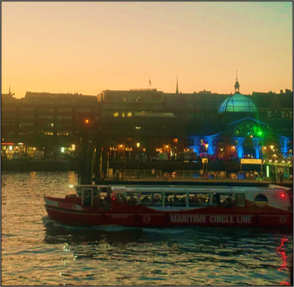
And one personal recommendation: if you have some free time, don’t miss Ferry Line 62 along the River Elbe. It offers a beautiful view of Hamburg and is a wonderful way to experience the city.
I also found plenty of dining options, including halal and vegetarian restaurants, within walking distance of the conference venue, making the stay very comfortable for international visitors with different dietary preferences.

The Women in HPC Community
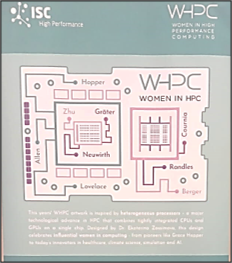
One of the most meaningful parts of ISC26 was becoming part of the Women in HPC community. Meeting researchers from different countries, exchanging ideas, and hearing diverse career journeys reminded me why communities like WHPC are so important. I am especially grateful to Ayesha Afzal, Eleanor, and the entire WHPC team for creating such an inclusive and supportive environment.
As the only participant representing Pakistan from my home institution, I felt both proud and responsible. I hope my experience encourages more women and researchers from Pakistan and the broader Global South to apply for future WHPC opportunities and become part of this growing international network.
Advice for Future Applicants
If you are planning to apply for a WHPC Travel Fellowship, here are a few suggestions from my experience:
- Clearly describe your previous HPC experience, whether through research, scientific computing, AI, simulations, or HPC infrastructure.
- Explain how attending ISC will benefit not only your own career but also your institution and wider community.
- Include concrete examples of teaching, mentoring, outreach, or community-building activities.
- Be specific about your future plans rather than writing general statements.
- Most importantly, don’t underestimate your own story. Your unique journey and the impact you aspire to create are just as important as your technical achievements.
Finally, remember that Women in HPC supports participation at both ISC in Europe and SC in the United States. Applications for upcoming SC26 Travel Fellowships are now open, and I strongly encourage students, researchers, and professionals to apply.
My first ISC was an unforgettable experience filled with learning, collaboration, new friendships, and inspiration. I look forward to returning in the future and, hopefully, seeing many more researchers from Pakistan and the Global South representing their work on the international HPC stage.
About the Author
Dr. Rabeea Jaffari is an interdisciplinary AI scientist and Assistant Professor at Mehran University of Engineering & Technology, Pakistan. Her research interests include AI, computer vision, scientific machine learning, AI for sustainability, and Human-AI interaction. She is committed to advancing responsible AI research and strengthening the visibility and participation of researchers from the Global South in international scientific communities.
LinkedIn: https://www.linkedin.com/in/rabeeajaff/
Email: rabeea.jaffari@gmail.com